
Research peptides are specialized amino acid chains sold primarily for laboratory study and cosmetic formulation, and you’ll find high purity research peptides through dedicated suppliers serving the beauty, wellness, and scientific communities. These compounds have become central to cutting-edge skincare because they signal skin cells to produce collagen, repair damage, and maintain firmness in ways that traditional ingredients simply can’t match.
The market has exploded over the past few years as brands race to incorporate peptides like Matrixyl, copper peptides, and Argireline into their formulations. What was once confined to pharmaceutical labs is now the foundation of your favorite serums and creams. But here’s the catch: not all peptides are created equal, and the quality gap between research-grade compounds and diluted commercial versions is massive.
Understanding what you’re actually buying matters more than ever. Research peptides sold for laboratory and formulation purposes typically offer higher concentrations and purity levels than finished products on retail shelves. They’re the raw materials behind the glow, the science before the pretty packaging.
For anyone curious about advanced skincare formulation, small-batch beauty entrepreneurship, or simply wanting to understand what’s actually in that $200 serum, navigating the research peptide market requires knowing the difference between legitimate suppliers and questionable sources. The legitimacy question is real, and so are the results when you source correctly.
What Research Peptides Actually Are (And Why Everyone’s Talking About Them)
Peptides are short chains of amino acids that act as messengers in your skin, telling your cells to produce more collagen, reduce inflammation, or repair damage. While the term might sound lab-focused, peptides are naturally occurring compounds your body already makes. The “research” label refers to the purity and grade of the ingredient, not its safety for everyday use.
The distinction matters when you’re shopping. Research-grade peptides meet stringent laboratory standards for purity and concentration, often exceeding 95% active ingredient. Cosmetic-grade versions can be diluted or combined with other ingredients, which isn’t necessarily bad but affects potency. Think of it like comparing essential oils to fragrance: both smell nice, but the concentration and sourcing differ dramatically.
Beauty brands have embraced peptides because they deliver visible results without the irritation associated with retinol or acids. Your skin recognizes these amino acid chains and responds by ramping up its natural repair processes. This makes peptides especially appealing for anyone with sensitive skin or those looking to layer multiple active ingredients without causing chaos.
- Matrixyl (Palmitoyl Pentapeptide)
- Stimulates collagen production and reduces the appearance of fine lines. One of the most researched peptides in anti-aging formulations.
- Argireline (Acetyl Hexapeptide-8)
- Often called “topical Botox” because it relaxes facial muscles to soften expression lines. Works best on forehead and around eyes.
- Copper Peptides
- Promote wound healing and skin regeneration while delivering antioxidant benefits. Give products a distinctive blue tint.
- Signal Peptides
- Tell skin cells to produce more collagen, elastin, and other proteins. The broadest category in skincare formulations.
The beauty world latched onto peptides for good reason: they’re backed by actual science, not just marketing departments. Clinical studies consistently show improvements in skin firmness, texture, and elasticity after consistent use. Unlike trendy ingredients that fade after one season, peptides have staying power because dermatologists and cosmetic chemists genuinely respect their efficacy. That credibility drives demand, which explains why you’re seeing peptide serums at every price point from luxury counters to drugstore shelves.
The Peptide Beauty Revolution: From Lab to Luxury
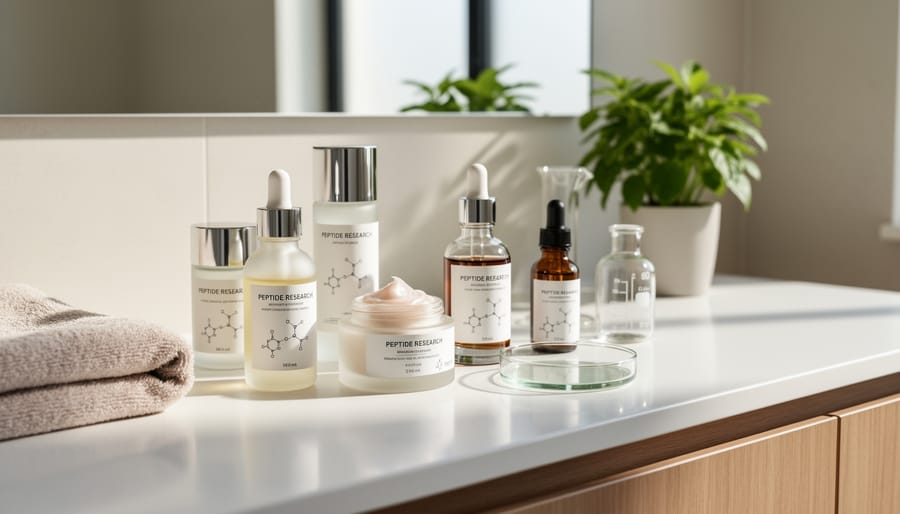
The transformation of peptides from laboratory compounds to luxury beauty staples represents one of the most significant shifts in cosmetics over the past decade. What started as ingredients in clinical trials has evolved into must-have components in premium skincare lines from Seoul to Paris.
Major beauty houses began incorporating peptides into their formulations around 2015, but the movement gained serious momentum when independent testing confirmed what dermatologists had been observing in their practices. Peptides genuinely stimulate collagen production, improve skin barrier function, and deliver visible results that hold up under scrutiny. Unlike many beauty trends built on marketing alone, this one has scientific credibility backing every claim.
The appeal extends beyond simple anti-aging promises. Different peptide types target specific concerns with remarkable precision. Signal peptides communicate with skin cells to boost collagen and elastin synthesis. Carrier peptides deliver trace elements like copper to support wound healing and enzymatic processes. Neurotransmitter-inhibiting peptides offer a topical alternative to injectables by relaxing facial muscles. This specificity allows consumers to build targeted skincare routines rather than relying on one-size-fits-all solutions.
Fashion capitals have embraced peptides with characteristic enthusiasm. Tokyo’s beauty retailers now dedicate entire sections to peptide serums and creams, with brands competing on concentration percentages and peptide combinations. Milan’s luxury cosmetics houses have launched peptide-infused makeup that promises skincare benefits alongside coverage. New York dermatology practices report patients specifically requesting peptide treatments after seeing results in friends and colleagues.
The demographic driving this revolution skews younger than traditional anti-aging consumers. Gen Z and millennial shoppers view peptides as preventative maintenance rather than damage control. They’re investing in these products in their twenties and thirties, attracted by the science-forward positioning and measurable outcomes. Social media amplifies the trend, with beauty influencers posting before-and-after documentation and discussing specific peptide sequences like matrixyl and argireline as casually as they once debated foundation shades.
This shift from research compound to beauty essential reflects broader consumer demands for transparency, efficacy, and ingredients that perform as promised. Peptides deliver on all three counts, which explains why they’ve moved from niche dermatology offices to Sephora shelves in record time.
Where to Find Quality Peptide Products in 2026
Finding legitimate peptide skincare doesn’t have to feel like navigating a sketchy underground market. The peptide beauty space has matured significantly, and quality products are now accessible through channels you already trust.
Start with established beauty retailers. Sephora, Bluemercury, and specialty skincare boutiques carry verified peptide formulations from brands that undergo proper testing and regulatory compliance. These retailers vet their suppliers and won’t risk their reputation on questionable products. In Canada, Murale and Sephora locations stock peptide serums and creams from brands like The Ordinary, Drunk Elephant, and SkinCeuticals. Shopping through these channels eliminates most safety concerns that plague the research peptide market.
Dermatologist offices and medical spas represent another reliable source, particularly for clinical-strength formulations. These establishments often carry professional-grade peptide products unavailable in standard retail settings. The bonus? You can consult with skincare professionals who understand peptide science and can recommend products suited to your specific concerns.
For online shopping, stick with the brand’s official website or authorized retailers. Third-party marketplaces create opportunities for counterfeit products, which is a genuine problem in the peptide space. A serum claiming to contain Matrixyl or copper peptides might be entirely ineffective at best, or contain harmful substitutes at worst.
Red flags should trigger immediate suspicion. If a seller markets “research peptides” without clear cosmetic intent, claims their products are “for research purposes only” while obviously targeting consumers, or operates through anonymous social media accounts, walk away. Legitimate peptide skincare companies clearly list ingredients, provide concentration information, and operate transparently.
Price can signal problems too. A peptide serum priced at twelve dollars when comparable products cost sixty likely contains negligible active ingredients. Conversely, astronomical pricing doesn’t guarantee quality. The sweet spot for effective peptide products typically ranges from forty to two hundred dollars depending on the specific peptides, formulation complexity, and concentration levels.
Check for third-party testing certificates and transparent ingredient sourcing. Reputable brands often publish stability testing data and provide batch-specific information. They explain their peptide sources and manufacturing processes rather than hiding behind proprietary blend claims.
When in doubt, consult beauty editors and dermatologists with established credibility. Publications like Allure, Byrdie, and Into The Gloss regularly evaluate peptide products through rigorous testing, providing reliable guidance that cuts through marketing noise. Your skin deserves better than gambling on questionable sellers promising miracle transformations.
Understanding Labels: What to Look for When Shopping
Product labels in the peptide beauty world can read like a chemistry exam, but cracking the code isn’t as complicated as brands want you to think. The key is knowing which information actually matters and which parts are just packaging theater designed to justify premium pricing.
Start with the ingredient list, where components appear in descending order by concentration. Effective peptides should appear within the first five to seven ingredients, if they’re buried near the end after preservatives and fragrance, you’re paying for trace amounts that won’t deliver results. Look for specific peptide names like palmitoyl tripeptide-1, acetyl hexapeptide-8, or copper peptides rather than vague “peptide complex” claims that reveal nothing about what’s actually inside.
The packaging itself tells a story about product quality. Peptides degrade when exposed to light and air, so legitimate formulations come in opaque or dark glass bottles with airless pump dispensers rather than jar packaging that requires you to dip fingers in repeatedly. This principle applies across science-backed skincare, similar to how premium CBD skincare benefits depend on proper preservation and delivery systems.
Watch for red flag terminology that signals more marketing than substance. Phrases like “peptide-infused,” “peptide technology,” or “advanced peptide system” often mask minimal actual peptide content. Brands confident in their formulations state specific peptide types and approximate concentrations, while those relying on buzzwords typically hide behind proprietary blend claims that legally allow them to disclose nothing useful.
Check expiration dates and batch codes, peptide products typically maintain efficacy for 6-12 months after opening, and reputable manufacturers print clear date stamps. If a product lacks this basic information or offers suspiciously long shelf life claims, that’s your signal to keep shopping.
The Price-to-Performance Equation
Quality peptide skincare spans a vast price spectrum, from $30 serums at Sephora to $500 luxury treatments from brands like Augustinus Bader. Understanding what drives these differences helps you invest wisely rather than overspend on marketing alone.
Concentration matters most. A serum with 10% peptide complex costs more to formulate than one with 2%, yet both might advertise peptides prominently. Higher concentrations typically deliver faster, more visible results, justifying premium pricing. Check ingredient lists carefully: peptides should appear within the first five ingredients to indicate meaningful amounts.
Peptide type also influences cost. Simple peptides like palmitoyl tripeptide are relatively affordable to produce. Complex biomimetic peptides that closely replicate growth factors require sophisticated synthesis and command higher prices. Both work, but advanced peptides often show results in weeks rather than months.
Delivery systems add value worth paying for. Encapsulated peptides that protect active ingredients until they penetrate skin cost more but perform better than basic formulations that degrade before absorption. Look for liposomal delivery or time-release technology in mid-to-premium products.
The sweet spot for effective peptide skincare sits between $60 and $150 for a quality serum. At this price point, you typically get therapeutic concentrations, stable formulations, and decent ingredient pairings. Products under $40 may contain peptides too diluted to show real impact, while ultra-luxury options above $200 often charge for packaging and prestige rather than superior efficacy.
Start with one well-formulated product rather than layering multiple cheaper alternatives. A single potent peptide treatment outperforms three weak ones and simplifies your routine.
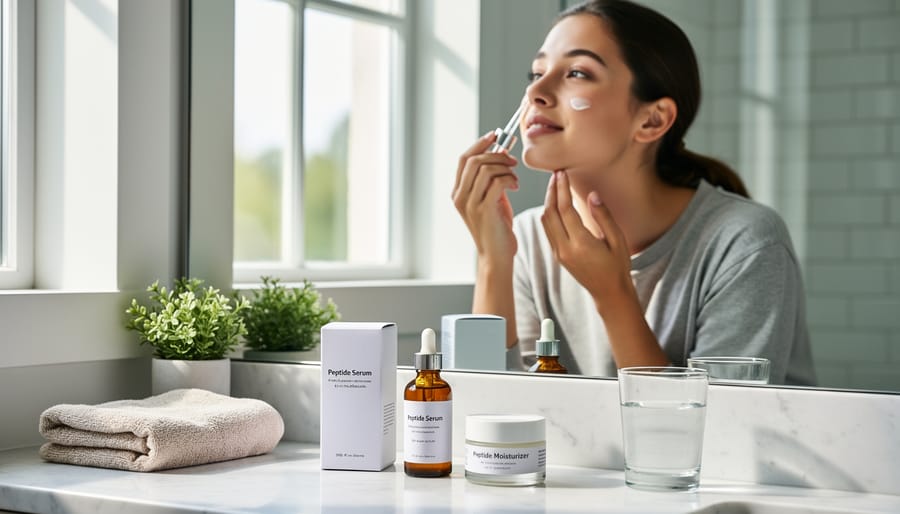
The peptide conversation in beauty isn’t slowing down, if anything, it’s becoming more sophisticated as consumers get savvier about what actually works. What started as a niche interest in research-grade compounds has evolved into a legitimate category where science meets self-care, and the results speak for themselves.
For fashion-forward Canadians navigating this space, the key takeaway is simple: approach peptide products with the same discernment you’d apply to any investment piece in your wardrobe. Legitimate peptide-infused skincare and wellness products exist, backed by real research and real results, but they require knowing what to look for and where to look. Understanding label terminology, recognizing quality formulations, and avoiding too-good-to-be-true claims will serve you better than chasing every trending ingredient that crosses your feed.
The beauty of peptides, beyond their skin benefits, is that they represent a broader shift toward science-backed, functional beauty. This isn’t about gimmicks or marketing hype; it’s about understanding how specific compounds interact with your skin and incorporating them into a healthy routine that prioritizes both efficacy and safety.
As this category continues to mature, expect more transparency from brands, better education for consumers, and increasingly innovative formulations. The research peptide trend isn’t going anywhere, it’s just getting started.